Jump to Section
The Complete History of UK Drum & Bass, Jungle & Jump Up
The definitive history of UK Drum & Bass, Jungle, and Jump Up — from the explosive birth of the sound in the early 1990s right through to the present day.
Drum & Bass is one of the most influential electronic music genres to emerge from the United Kingdom. Born from the ashes of the late-80s and early-90s rave scene, it evolved out of Breakbeat Hardcore and quickly splintered into distinct but related styles — most notably Jungle and what would eventually become known as Drum & Bass.
At its core, the genre is defined by fast breakbeats (typically 160–180 BPM), deep rolling basslines, and a raw, energetic attitude that reflects the UK’s underground club culture, sound system heritage, and working-class rave roots.
• Breakbeat Hardcore – The direct predecessor of Jungle and Drum & Bass.
• Jungle – The raw, ragga-influenced, darker style that emerged first (early–mid 1990s).
• Drum & Bass – The broader, more refined evolution that developed alongside Jungle.
• Jump Up – The high-energy, party-focused offshoot known for its heavy bass and energetic drops.
• Sub-genres – Drum & Bass has many distinct sub-genres, including Liquid (melodic & soulful), Neurofunk (dark & technical), Techstep (industrial & aggressive), Minimal, Deep, Ragga, and Crossbreed.
Over the past three decades, UK Drum & Bass and Jungle have gone through multiple waves of innovation, commercial success, underground revivals, and global influence. From the warehouse raves of 1991 to the festival main stages of today, the music has constantly reinvented itself while staying true to its rebellious, bass-heavy DNA.
In this article, we take a deep dive into every major era — exploring the key artists, landmark releases, cultural shifts, and sonic developments that shaped one of Britain’s most important musical exports.
Pre-Origins: Sound Systems & the Road to Rave (1970s–1988)
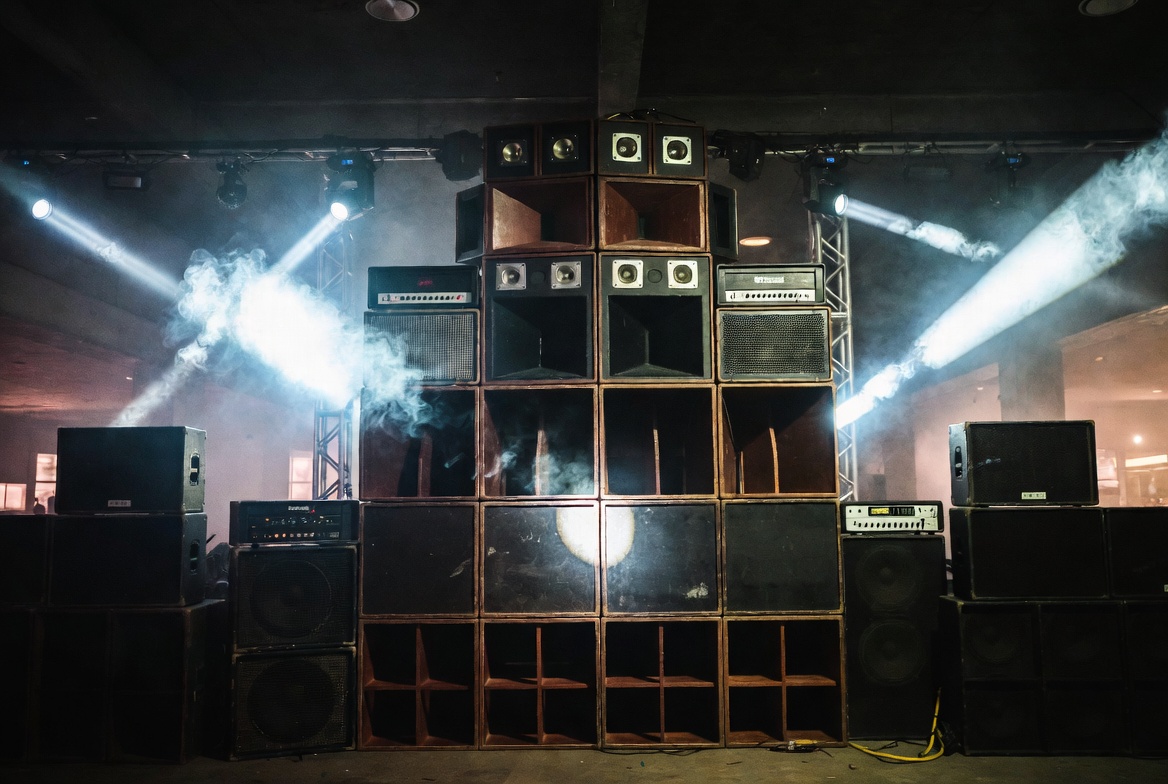
Long before Drum & Bass and Jungle existed as distinct genres, the cultural foundations were already being built in Britain. The roots of the sound can be traced back to the UK’s Caribbean communities, particularly in London, Birmingham, and Bristol, where sound system culture had been thriving since the 1970s.
Immigrants from Jamaica brought with them powerful sound systems, reggae, and dub music. Events known as blues parties — large, often unlicensed house parties — became central to Black British social life. These parties featured heavy bass, echo-laden dub tracks, and the art of toasting (an early form of MCing over records). This culture would later have a major influence on Jungle music in the 1990s.
At the same time, hip-hop was introducing British audiences and producers to breakbeats. Iconic drum breaks, especially the Amen Break from The Winstons’ 1969 track “Amen, Brother”, began circulating within the UK scene. These chopped-up, energetic drum patterns would eventually become one of the defining features of Jungle and Drum & Bass.
The major turning point came in 1988 with the explosion of Acid House. Known as the Second Summer of Love, this period saw thousands of young people across the UK attending warehouse raves and outdoor parties. The combination of electronic music, ecstasy culture, and the existing sound system and reggae traditions created a new, hybrid environment.
It was within this melting pot of Caribbean bass culture, hip-hop breaks, and acid house energy that the seeds of Jungle and Drum & Bass were planted. By the end of the 1980s, the UK was primed for a new, faster, and more rhythmically complex sound to emerge from the rave scene.
The Birth of Breakbeat Hardcore & Proto-Jungle (1989–1992)
Between 1989 and 1992, the UK rave scene underwent a rapid and dramatic transformation. What began as fast, sample-heavy Breakbeat Hardcore gradually evolved into something darker, more complex, and rhythmically intense. This period is widely regarded as the birth of Proto-Jungle — the crucial bridge between hardcore and the full Jungle sound that would explode in 1993.
Two DJs stand out as the most influential figures during this era: Fabio and Grooverider. At their weekly Rage nights at London’s Heaven nightclub, they began experimenting with breakbeats in ways that would change electronic music forever. Instead of playing breaks at their original speed, they started pitching them up significantly — often by several semitones. This simple technique created a much faster, more urgent, and energetic feel that resonated powerfully with ravers.
As the tempos increased (moving well beyond the typical hardcore range), producers began chopping and rearranging breakbeats in increasingly creative ways. The most important and influential of these was the Amen Break, taken from the 1969 track “Amen, Brother” by The Winstons. Its syncopated, energetic pattern proved incredibly versatile. Producers sliced it into individual hits, pitched it, reversed it, and layered it with other breaks, creating entirely new rhythms that became the backbone of the emerging sound.
While the Amen Break eventually became the most famous, other breaks were also heavily used during this period, including the Apache Break, the Think Break, and various funk and soul breaks. However, it was the creative manipulation of the Amen that helped define the early Jungle aesthetic.
During these years, the music also began to take on a darker character. While much of the early hardcore scene was upbeat and euphoric, a new strain started to emerge — heavier, more atmospheric, and sometimes menacing. This shift was partly influenced by the growing use of darker samples, deeper basslines, and a move away from the more commercial happy hardcore sound that was developing in parallel.
By 1991 and 1992, the scene was clearly splitting. On one side was the increasingly commercial and formulaic happy hardcore. On the other was a rawer, underground sound that would soon be called Jungle. This proto-Jungle era was still largely underground, driven by white labels, pirate radio, and a tight-knit network of DJs and producers who were constantly pushing the sound forward.
• Goldie (as Rufige Kru) – “Terminator” (1992)
One of the most important tracks of the era. Dark, cinematic, and technically advanced for its time, it helped signal the shift toward a more serious and atmospheric direction.
• Origin Unknown – “Valley of the Shadows” (1993)
Although released in early 1993, it was recorded during the proto-Jungle period. Its haunting atmosphere and rolling break made it one of the defining tracks of the early scene.
• LTJ Bukem – “Demon’s Theme” (1992)
Bukem’s track stood out for its more melodic and atmospheric approach. It helped lay the foundations for what would later become known as Liquid Drum & Bass.
• A Guy Called Gerald – “28 Gun Bad Boy” (1992)
Brought strong reggae and bass culture influences into the hardcore scene. The track’s heavy bass and ragga energy pointed toward the Jungle sound that was just around the corner.
The Jungle Explosion (1993–1995)
Between 1993 and 1995, Jungle fully emerged as its own distinct genre and experienced an explosive period of creativity, popularity, and cultural impact. What had been developing underground during the proto-Jungle years suddenly broke through with force, becoming one of the most exciting and talked-about sounds in British music.
This era was defined by two main musical characteristics: a strong ragga influence and increasingly complex breakbeat editing. Producers began heavily incorporating reggae and dancehall elements — including toasting-style MC vocals, ragga samples, and basslines inspired by sound system culture. At the same time, breakbeats were being chopped, rearranged, and layered with unprecedented creativity, often using the Amen break as the foundation.
The result was a sound that felt raw, energetic, and distinctly British. Jungle was faster and more rhythmically complex than most other forms of electronic music at the time, with tempos typically sitting between 160–170 BPM. The combination of heavy sub-bass, intricate drum programming, and ragga vocals created something that felt both futuristic and deeply rooted in Black British and Caribbean musical traditions.
The Role of Pirate Radio and the Underground Scene
Pirate radio played a massive role in Jungle’s rapid rise. Stations such as Kool FM, Don FM, and Flex FM became essential platforms for the music. These stations helped spread the sound across London and beyond, giving exposure to producers and MCs who had little access to mainstream media. The raw, unpolished energy of pirate radio perfectly matched the spirit of Jungle.
At the same time, the rave scene continued to grow, with Jungle nights becoming increasingly popular. Events often featured multiple MCs trading verses over rolling breakbeats, creating an intense, high-energy atmosphere that was very different from the more commercial happy hardcore scene that was developing in parallel.
Key Artists and Landmark Releases
Several artists rose to prominence during this period and helped define the Jungle sound:
- Shy FX – His track “Original Nuttah” (with UK Apachi) became one of the biggest anthems of the era, bringing ragga vocals and heavy bass to a mainstream audience.
- General Levy – Became one of Jungle’s most recognisable MCs, with his energetic toasting style featured on many key tracks.
- Congo Natty (Rebel MC) – Brought strong reggae and conscious influences into Jungle.
- Roni Size – Part of the Bristol scene, he would go on to win the Mercury Prize with Reprazent in 1997, but was already making waves in the mid-90s.
Goldie’s Timeless (1995) – A Landmark Album
In 1995, Goldie released his debut album Timeless, widely regarded as one of the most important albums in Jungle and Drum & Bass history. The album took the raw energy of Jungle and elevated it with cinematic production, emotional depth, and ambitious song structures.
Tracks like “Inner City Life” showcased a more sophisticated and atmospheric side of the genre, while still retaining its power and intensity. Timeless helped bring Jungle to a much wider audience and proved that the music could work as a full album experience, not just as club tracks and white labels.
The success of Timeless marked a turning point. While Jungle was still very much an underground movement, it was beginning to gain serious recognition from the wider music industry and media.
The Peak and the Beginning of Change
By 1994 and 1995, Jungle was at its commercial and creative peak. The sound dominated London’s underground club scene and was starting to influence other genres. However, this period also marked the beginning of a gradual split within the scene.
As some producers moved toward darker, more technical sounds (which would later be called Drum & Bass), others stayed closer to the raw, ragga-influenced Jungle style. This divergence would become more pronounced in the years that followed.
The Great Schism: Jungle vs Drum & Bass (1995–1997)
By the mid-1990s, the Jungle scene had grown so large and diverse that it began to fragment. What had once been a relatively unified underground movement started to split into distinct directions. This period is often referred to as the **Great Schism** — the moment when Jungle began to evolve into several different sub-genres, and when the term Drum & Bass started to gain prominence alongside (and sometimes instead of) Jungle.
Several factors contributed to this split. As the music gained more attention, producers began pushing the sound in very different directions. Some wanted to take it darker and more technical, others wanted to make it more melodic and atmospheric, while another camp focused on keeping it raw, heavy, and party-focused. At the same time, the mainstream music industry was beginning to take notice, which created tension between underground purists and those open to wider success.
The Main Directions of the Split
During 1995–1997, three main strands emerged from the original Jungle sound:
- Intelligent Drum & Bass / Atmospheric
Led by artists such as LTJ Bukem and his Good Looking Records label, this style moved away from heavy ragga influences toward more melodic, atmospheric, and soulful sounds. It often featured smoother breakbeats, jazz-influenced samples, and uplifting or cinematic vibes. This direction appealed to listeners who wanted something more refined than the raw energy of early Jungle. - Jump Up
This style stayed closer to the energetic, party-oriented roots of Jungle. It was characterised by heavy, rolling basslines, simpler but powerful drops, and a strong focus on dancefloor impact. Jump Up remained popular in certain regions and clubs, and later experienced major revivals in the 2010s. During this time, the style evolved further, incorporating more technical and futuristic sounds along with hard-hitting, sub-slapping rhythms. Many consider Jump Up to be one of the most experimental corners of Drum & Bass, where new sounds and production techniques often emerge first. - Techstep
The darkest and most aggressive of the new directions. Techstep was defined by complex, industrial-sounding basslines, dark atmospheres, and highly technical drum programming. Artists such as Ed Rush & Optical, Konflict, and labels like Virus Recordings pushed the sound into much more sinister and futuristic territory. This style would heavily influence the Neurofunk sound that developed in later years.
The Rise of the Term “Drum & Bass”
During this period, many people in the scene began using the term Drum & Bass more frequently. While “Jungle” had been the dominant name between 1993 and 1995, some felt the word had become too closely associated with the ragga-influenced style. Others simply used “Drum & Bass” as a broader umbrella term that could cover all the different directions the music was taking.
This created an ongoing debate within the scene about identity. Some artists and fans insisted they made Jungle, while others preferred Drum & Bass. In reality, the two terms often overlapped, and the music continued to evolve under both names.
Roni Size & Reprazent – New Forms (1997)
One of the most significant moments of this era came in 1997 when Roni Size & Reprazent won the prestigious Mercury Prize for their album New Forms. This was a landmark achievement — it was the first time a Drum & Bass (or Jungle) album had received such mainstream critical recognition in the UK.
New Forms showcased a sophisticated, live-influenced take on the genre, blending intricate breakbeats with jazz, soul, and live instrumentation. Winning the Mercury Prize helped elevate the profile of Drum & Bass significantly and proved that the music could be taken seriously as an art form, not just as club music.
However, the win also highlighted the growing divide in the scene. While some celebrated the recognition, others felt it represented a move away from the raw underground spirit that had defined Jungle just a few years earlier.
The End of an Era
By the end of 1997, the Jungle scene as it had existed in 1993–1995 had fundamentally changed. The music had splintered into multiple sub-genres, the terminology was shifting, and the scene was becoming more diverse — but also more fragmented. This period marked the end of Jungle’s initial explosive phase and the beginning of Drum & Bass maturing into a broader, more established genre with many different branches.
2000s: Liquid Funk, Neurofunk & Jump Up
The 2000s marked a period of maturation, diversification, and commercial growth for Drum & Bass. After the explosive and chaotic years of the mid-1990s, the genre settled into several distinct sub-genres, each with its own identity, audience, and sound. While the raw energy of early Jungle had largely faded, the 2000s saw Drum & Bass develop greater sophistication, better production quality, and wider international recognition.
Three styles in particular came to define much of the decade: Liquid Funk, Neurofunk, and the continued evolution of Jump Up. At the same time, other styles such as Minimal and Deep Drum & Bass also gained traction, creating one of the most stylistically diverse periods in the genre’s history.
Liquid Funk
Liquid Funk (also simply called Liquid Drum & Bass) became one of the most popular and commercially successful styles of the 2000s. It was characterised by melodic basslines, soulful and atmospheric production, warm pads, and often vocal elements. While it had roots in the Intelligent Drum & Bass of the mid-1990s (particularly LTJ Bukem’s influence), Liquid Funk developed its own distinct identity during this decade.
The style was heavily driven by one label in particular: Hospital Records. Founded in 1996 by Tony Colman and Chris Goss, Hospital Records became the dominant force in Liquid Funk throughout the 2000s. The label’s roster helped define the sound and brought it to a much wider audience.
Key pioneers and artists of Liquid Funk in the 2000s included:
- High Contrast – One of the most important artists of the era. His melodic, cinematic style helped popularise Liquid Funk. Key tracks include “Return of Forever” and his remix of “Kiss Kiss Bang Bang”.
- London Elektricity – A central figure at Hospital Records. Tracks like “Song in the Key of Knife” and “Billion Dollar Gravy” became anthems.
- Logistics – Known for his crisp, melodic productions. Tracks such as “Together” and “Boy” helped define the Hospital sound.
- Nu:Tone – Brought a soulful, musical approach. His album Brave Nu World (2005) is considered a classic of the style.
- Danny Byrd – Combined Liquid elements with Jump Up energy. Tracks like “Shock Out” and “Red Mist” were big dancefloor hits.
- Camo & Krooked – Rose toward the end of the decade and helped carry Liquid into the 2010s with a more modern, festival-friendly sound.
Liquid Funk became especially popular at festivals and larger events, helping Drum & Bass reach new audiences who might have found the darker styles too intense.
Neurofunk
Neurofunk emerged as the darker, more technical evolution of the Techstep sound from the late 1990s. It was characterised by complex, modulated basslines, dark atmospheres, precise and intricate drum programming, and a generally futuristic or dystopian feel. Neurofunk represented the more underground and “serious” side of Drum & Bass during the 2000s.
While Techstep laid the groundwork in the late 90s, Neurofunk truly came into its own in the 2000s as production technology improved and artists pushed the sound further.
Key pioneers and artists of Neurofunk in the 2000s included:
- Ed Rush & Optical – Already established in the 90s, they continued to be major figures. Their album Wormhole (1998) and follow-up work heavily influenced the Neurofunk sound.
- Noisia – Dutch trio who became one of the biggest names in Neurofunk during the mid-to-late 2000s. Tracks like “Machine Gun”, “Shellshock”, and “Stigma” pushed the boundaries of technical production.
- Black Sun Empire – Known for their dark, cinematic Neurofunk. Albums like Driving Insane and tracks such as “Arrakis” became staples.
- Phace – German producer who rose in the mid-2000s with highly technical and aggressive Neurofunk.
- Mefjus – Emerged toward the end of the decade and would become even more prominent in the 2010s.
- Current Value – Known for extremely dark and experimental Neurofunk.
Neurofunk remained largely underground compared to Liquid Funk, but it developed a dedicated following and influenced many producers who valued technical skill and sonic innovation.
Jump Up
Jump Up continued strongly throughout the 2000s as the energetic, party-focused branch of Drum & Bass. While it had existed since the mid-1990s, it maintained its popularity by staying true to its core principles: heavy basslines, simple but effective drops, and high dancefloor energy.
Jump Up often served as a bridge between the underground and more commercial scenes. It was popular in clubs and raves where people wanted high-energy music without the complexity of Neurofunk or the smoothness of Liquid.
Key artists in Jump Up during the 2000s included:
- DJ Hazard – One of the most consistent and respected Jump Up producers. Tracks like “Digital Warfare”, “Mr Happy”, and “Food Fight” became massive dancefloor anthems.
- Original Sin – Known for heavy, rolling Jump Up tracks. His productions were staples in many sets throughout the decade.
- Taxman – Another key figure in the Jump Up scene with a raw, energetic style.
- Clipz – Produced big Jump Up tracks and was also known for his work with more mainstream artists later on.
- Hedex – Although he rose more prominently in the 2010s, he began making waves toward the end of the 2000s.
Jump Up remained one of the most accessible entry points into Drum & Bass for new listeners and continued to thrive in certain regional scenes and club nights.
Other Notable Styles of the 2000s
While Liquid, Neurofunk, and Jump Up were the most prominent, other styles also developed during this period:
- Minimal Drum & Bass – Artists like Marcus Intalex, dBridge, and Fracture developed a stripped-back, rolling style that focused on groove and atmosphere rather than big drops.
- Deep Drum & Bass – A warmer, more atmospheric offshoot that overlapped with Liquid but often had a deeper, more introspective feel. Artists such as Calibre and Redeyes were key figures.
- Sambass – A Brazilian-influenced style that gained some popularity, blending Drum & Bass rhythms with samba and Latin elements.
Overall Scene Changes in the 2000s
The 2000s saw Drum & Bass become more professional and organised. Labels like Hospital Records, Shogun Audio, Critical Music, and Metalheadz played major roles in shaping the different directions of the genre. Production quality improved significantly due to better technology, and the internet began to change how music was distributed and discovered.
While the genre never achieved the same level of mainstream crossover it had in the mid-90s, it developed a more stable and sustainable scene with dedicated fans across multiple sub-genres. The 2000s laid the groundwork for the even greater diversification and global spread that would occur in the 2010s.
2010s: Jump Up Explosion
While Liquid Funk and Neurofunk dominated much of the conversation in the late 2000s, the **2010s** saw a massive explosion and commercial dominance of **Jump Up**. After going through various phases since the mid-1990s, Jump Up experienced one of its strongest periods ever during this decade, becoming one of the most popular and widely played styles of Drum & Bass — especially in the UK club and rave scene.
Jump Up in the 2010s was characterised by heavy, rolling basslines, energetic drops, relatively simple but highly effective structures, and a strong focus on dancefloor impact. It was raw, fun, and unapologetically rave-oriented. The style thrived on big systems, MC culture, and the growing festival scene.
Why Jump Up Became So Big in the 2010s
Several factors contributed to Jump Up’s popularity during this decade:
- The rise of **big outdoor festivals** and larger club events, where high-energy music performed well.
- Strong **MC culture** — many Jump Up nights featured multiple MCs, creating an intense, party atmosphere.
- Improved production tools made it easier to create heavy, clean basslines.
- Social media and platforms like YouTube helped new tracks spread quickly.
- A new generation of producers who grew up on 90s and 2000s Jump Up brought fresh energy while respecting the old-school sound.
Key Pioneers and Artists of 2010s Jump Up
The 2010s Jump Up scene was driven by both veteran artists and a strong new generation of producers. Here are some of the most important names:
Established Veterans
- DJ Hype — A true legend of the scene. Although active since the 90s, Hype remained highly influential throughout the 2010s. His label Playaz became one of the most important platforms for Jump Up, releasing tracks from many of the biggest artists of the era.
- Taxman — One of the most consistent and respected Jump Up producers of the decade. Known for his raw, heavy, and energetic style. Tracks like “Rave Out” and collaborations with Hype were big anthems.
- Original Sin — Another veteran who stayed relevant throughout the 2010s. His productions were known for their weight and dancefloor power.
- DJ Hazard — Continued to be a major figure with tracks that bridged older Jump Up energy with the new school sound.
New Generation / Rising Stars Leading up-to 2020
- Hedex — Fast Becoming one of the biggest names in Jump Up during the mid 2010s. His tracks were heavy, catchy, and perfectly suited to big systems and festivals. He helped bring Jump Up to a new generation of ravers with his first official commercial release 'The Devilish EP' around 2013.
- Serum — Highly prolific and influential. Known for his distinctive basslines and consistent output. He became one of the most played Jump Up producers of the decade.
- Voltage — Rose to prominence with a raw, energetic style that resonated strongly on the dancefloor.
- Turno — Delivered powerful, rolling Jump Up that became a staple in many sets.
- T>I — Known for his heavy, no-nonsense approach to Jump Up production.
- Upgrade — Brought a slightly more modern, polished edge while staying true to Jump Up’s energetic roots.
- Amplify — Gained significant popularity with big, festival-friendly Jump Up tracks.
- Dutta — Another key name who helped shape the sound of the mid-to-late 2010s.
- enta — Known for his distinctive style and strong presence in the scene.
- Basslayerz — Delivered heavy, bass-driven Jump Up that worked well in both clubs and festivals.
Important Labels of the 2010s Jump Up Scene
- Playaz (run by DJ Hype) — Arguably the most important Jump Up label of the decade. Released music from many of the biggest artists mentioned above.
- Low Down Deep — Another major player that helped push the sound forward.
- Biologic — Released a lot of influential Jump Up during this period.
- Ganja Records — The legendary 90s label was revived and continued to have an impact.
Characteristics of 2010s Jump Up
Jump Up in the 2010s had some distinct sonic traits:
- Heavy, rolling basslines that were designed to shake sound systems.
- Relatively straightforward but highly effective structures — focused on impact rather than complexity.
- Strong use of MCs, with many tracks featuring vocal tags or full vocal performances.
- A balance between old-school energy and modern production clarity.
- High suitability for big outdoor events and festivals.
Cultural Impact
During the 2010s, Jump Up became one of the dominant sounds at many UK raves and festivals. While Liquid and Neurofunk had their own dedicated followings, Jump Up often felt like the “people’s choice” — the sound that got the biggest reactions on the dancefloor at many events.
The style also benefited from the growing popularity of Drum & Bass at major UK festivals. Artists like Hedex, Serum, and Voltage helped bring Jump Up to larger audiences who might not have been deep into the scene before.
By the end of the decade, Jump Up had cemented itself as one of the most important and enduring branches of Drum & Bass, proving that the raw, energetic spirit of the genre was still very much alive.
2020s & Beyond: The Modern Era
The current Drum & Bass scene is thriving with a wide range of hybrid styles, new talent, and established artists continuing to push the genre forward. The 2020s have seen a healthy mix of high-energy Jump Up, dark and technical Neurofunk, melodic Liquid, and experimental hybrid sounds all coexisting.
Simula
Started with gritty Jump Up in his earlier days before evolving into a darker, hybrid, almost alien-sounding style of Drum & Bass. He runs the respected Neksus Sound label and continues to be a key figure in the underground scene.
ACP (Bristol)
Fast-rising Bristol producer known for his energetic productions that blend Drum & Bass with riddim influences. His unique style has made him one of the most exciting new talents to emerge in recent years.
K Motionz
Young Birmingham-based producer known for his high-energy sets and consistent output. His tracks are reliable dancefloor fillers that combine heavy bass with catchy, energetic arrangements.
Hedex
One of the biggest names in modern Jump Up. He has brought raw, high-energy Jump Up to a new generation of ravers through his powerful productions and festival-dominating sets.
Bou
Highly respected producer known for his dark, rolling, and technically impressive Drum & Bass. His precise production and unique sound design have earned him a strong reputation across both underground and mainstream circles.
Kanine
Fast-rising producer who has become one of the most exciting new names in high-energy Drum & Bass. His tracks are known for their weight, energy, and strong dancefloor appeal, making him a regular feature in big sets.
Dimension
One of the most successful Drum & Bass artists of the modern era. He has helped bring the genre to larger festival audiences with his polished, high-impact productions and crossover appeal.
Alix Perez
Brighton-based producer widely regarded as one of the most technically accomplished artists in modern Drum & Bass. His dark, intricate, and atmospheric productions have helped push the boundaries of hybrid and experimental styles.
Voltage
Highly active and respected producer known for his powerful, high-energy Drum & Bass. He has become a staple in the current scene with his consistent output and strong dancefloor presence.
Ivy Lab
UK duo known for their experimental and forward-thinking approach to Drum & Bass. Their hybrid, leftfield productions have pushed creative boundaries and earned them a strong reputation among fans of more innovative and atmospheric sounds.
Foreign Concept
Respected UK producer recognised for his technical, rolling Drum & Bass with a darker edge. He has built a strong following in the underground scene through his precise production and consistent output on labels like Critical Music.
S.P.Y
Long-time UK-based producer (Brazilian-born) known for his dark, technical, and high-quality Drum & Bass. With a career spanning over 15 years, he remains one of the most consistent and respected names in the modern scene.
Wilkinson
One of the biggest and most consistent names in modern Drum & Bass. With multiple hit releases and major festival appearances, he has helped bring the genre to wider audiences while maintaining a strong presence in the UK scene.
Hybrid Minds
Highly popular UK duo known for their melodic and atmospheric Drum & Bass. They have built a massive following through their emotional productions and consistent performances at major events across the UK and Europe.
Grafix
One of the most popular rising stars in UK Drum & Bass. Known for his high-energy productions and strong live performances, he has quickly become a favourite at festivals and club nights across the country.
Serum
One of the most played and respected producers in the current Jump Up scene. His heavy, rolling basslines and consistent output have made him a staple in many big sets throughout the UK.
Upgrade
Highly popular UK producer known for his energetic and powerful Jump Up productions. He has become a regular on major lineups and is widely respected for his consistent output and strong dancefloor presence.
Voltage
Highly active UK producer known for his powerful, high-energy Drum & Bass. He has become a regular feature on major lineups thanks to his consistent output and strong dancefloor presence.
Amplify
Fast-rising producer making big waves with his energetic and festival-ready Jump Up productions. He has quickly become a favourite among promoters and ravers alike.
Dutta
Respected UK producer known for his heavy, modern Jump Up sound. He has built a strong reputation through consistent releases and regular appearances on big lineups.
enta
Emerging talent who has rapidly gained popularity with his high-energy and technical Jump Up productions. He is quickly becoming a staple name on UK flyers and events.
Women Who Shaped the Scene
Although Drum & Bass and Jungle have often been viewed as male-dominated genres, several UK female DJs and producers have made significant and lasting contributions. Their influence spans from the early days of the rave scene through to the present day, helping to shape the sound, culture, and visibility of the music.
DJ Rap
One of the most important early female figures in Drum & Bass, DJ Rap was already a respected name in the rave scene before the genre fully emerged. As both a DJ and producer, she released influential tracks in the early 90s and brought a more musical and melodic approach to the sound. Her work helped open doors for future generations of female artists.
DJ Storm
DJ Storm was one of the first prominent female Drum & Bass DJs. Active since the early days of the genre, she played a key role in establishing female presence behind the decks during a time when the scene was heavily male-dominated. Her long career helped normalise women in DJ roles within UK bass music.
DJ Dazee
DJ Dazee has been a respected figure in the UK Drum & Bass scene for many years. Known for her high-energy sets and strong connection to the Jump Up and rave side of the music, she has helped keep the raw, dancefloor-focused spirit of the genre alive while inspiring other female DJs to step up in a male-dominated space.
DJ Flight
DJ Flight has been a major figure in Drum & Bass for over 25 years. As a respected DJ, long-time BBC Radio 1 presenter, and advocate for the genre, she played an important role in bringing Drum & Bass to wider audiences while remaining connected to the underground. Her sustained presence helped challenge perceptions of the scene as exclusively male-dominated.
Harriet Jaxxon
Harriet Jaxxon is a well-established UK Drum & Bass DJ and radio presenter. With a long-running presence on Rinse FM and consistent performances across the UK and Europe, she has become one of the most recognised female names in the scene, helping to increase visibility for women behind the decks.
Nia Archives
In more recent years, Nia Archives has become one of the most exciting and visible UK producers helping to bring Jungle back into the spotlight. Blending classic Jungle elements with modern production, her music has introduced the genre to a new generation while highlighting the importance of Black female voices in UK bass music. Her rapid rise has sparked renewed interest in Jungle’s roots and cultural significance.
Alongside these artists, many other UK-based female DJs and producers have made important contributions to Drum & Bass and Jungle, including Anaïs, B.Traits, Ivy Lab, Siren, Sabrina, Miss Represent, Charlotte Devany, T-Lex, Charlie Tee among many others working as DJs, producers, promoters, label owners, and radio hosts. Their growing presence is helping to create a more diverse and inclusive future for UK Drum & Bass and Jungle.
Cultural Legacy
UK Drum & Bass, Jungle, and Jump Up have left a lasting mark on global music culture. What began in the underground rave scenes of early 1990s Britain has grown into one of the most influential and enduring electronic music genres in the world. Its DNA can now be heard across countless other styles, from Dubstep and Grime to Bassline, UK Garage, and even mainstream pop and electronic music.
At its heart, the scene has always been defined by three powerful qualities: multiculturalism, innovation, and an unwavering dancefloor focus. Born from the meeting point of Caribbean sound system culture, Jamaican reggae and dub, hip-hop breakbeats, and the UK’s working-class rave spirit, Drum & Bass has always reflected the diverse communities that created it. This multicultural foundation remains one of its greatest strengths today.
Technically, the genre has consistently pushed the boundaries of electronic music production. From the complex breakbeat chopping of the Jungle era to the intricate bass design of modern Neurofunk, Drum & Bass producers have often been at the forefront of innovation in sound design and rhythm programming. Many techniques pioneered in Drum & Bass have gone on to influence other genres around the world.
Despite changes in style, technology, and popularity over more than three decades, the music has never lost its core identity as dancefloor music. Whether it’s the raw energy of Jump Up, the atmospheric depth of Liquid, or the dark intensity of Neurofunk, the goal has always remained the same — to move people on the dancefloor. This commitment to the rave experience is a big part of why the scene has remained so vibrant and loyal for so long.
From warehouse raves in the early 90s to major festivals in the 2020s, from pirate radio to global streaming platforms, UK Drum & Bass, Jungle, and Jump Up have proven to be remarkably adaptable while staying true to their roots. The culture continues to thrive because it was built on passion, creativity, and community — values that still define the scene today.
The Wider Scene - Too Many To Mention
Highlighting some of the most well-known and influential figures in UK Drum & Bass and Jungle is all well and good, but In reality, the scene is made up of **thousands** of DJs, producers, MCs, promoters, label owners, radio hosts, and event organisers who have all played a part in shaping the music and culture over the past three decades.
From the early pioneers of the 1990s to the new generation of artists emerging today, countless people have contributed — many of whom will never receive widespread recognition. Some have released music quietly for years with little fanfare. Others have supported the scene from behind the scenes as promoters, sound engineers, graphic designers, or radio hosts. Many more are still finding their voice and have yet to be discovered.
Every name mentioned above stands on the shoulders of those who came before them, and alongside many more working today whose contributions are just as meaningful. The underground nature of Drum & Bass and Jungle means that some of the most important work often happens away from the spotlight.
To every DJ, producer, MC, and supporter — whether your name appears here or not — thank you. The music continues to grow, evolve, and survive because of the collective effort of so many. The scene belongs to all of you.
Here's to another decade of Drum & Bass, Jungle, and Jump Up — and to everyone still keeping the scene alive.
Stay locked in.
The bass continues...